Apple and Johnson & Johnson today
announced a new study that aims to gather more information surrounding atrial fibrillation and other conditions tracked by
iPhone and
Apple Watch. The "
Heartline Study" will include an iPhone app, and explores whether health tracking features of iPhone and heart health features on Apple Watch can improve health outcomes.
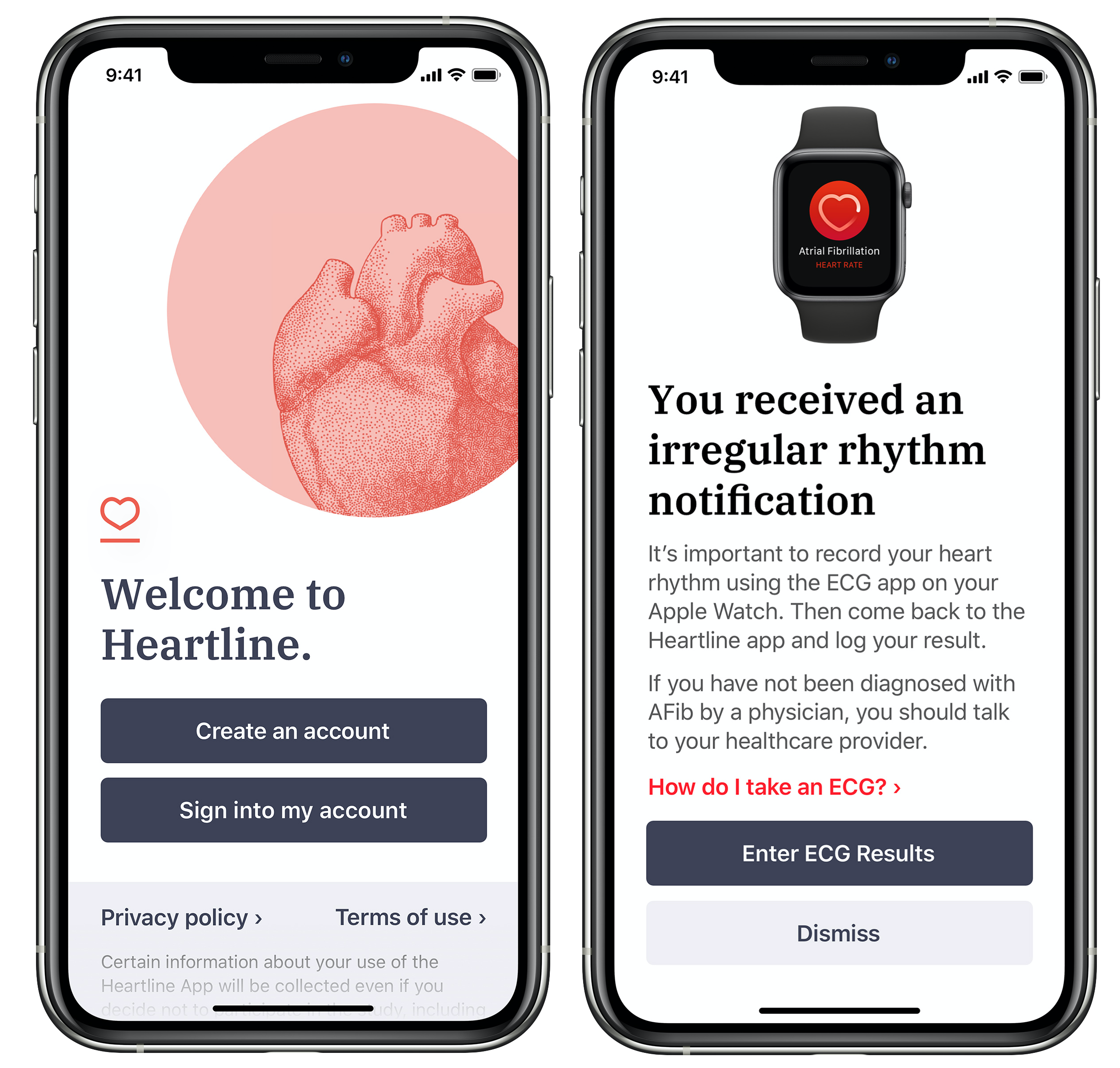
The study is specifically aimed at individuals over 65 years of age. Apple and Johnson & Johnson are looking to see if Apple's health tracking technology can help reduce the risk of stroke thanks to earlier detection of atrial fibrillation, which is a leading cause of stroke in the United States and detectable with the Apple Watch's ECG feature.
The main issue with atrial fibrillation is that it is difficult to diagnose, due to the lack of physical symptoms in most patients. With Apple Watch, watchOS can alert users to a potential AFib event even if they are unaware of what's happening to them.
"Apple technology is making a meaningful impact on scientific research through the powerful capabilities of iPhone and Apple Watch, all with privacy at the center of the participant experience," said Myoung Cha, Apple's Head of Health Strategic Initiatives. "The Heartline Study will help further understanding of how our technology could both contribute to science and help improve health outcomes, including reducing the risk of stroke."
Those interested in the study must be 65 or older, a U.S. resident for the duration of the study, have traditional Medicare, own an iPhone 6s or later (with iOS 12.2 or later), and agree to provide access to their Medicare claims data. Once randomized participants are selected, they will be divided into two groups: one will only use the iPhone app and the other will use the iPhone app in addition to obtaining an Apple Watch. The study will last three years.
Apple and its devices regularly participate in scientific studies, most recently at Stanford Medicine with the "Apple Heart Study." This study began in 2017, and in November 2019 Stanford Medicine
published results that ultimately determined the Apple Watch can successfully detect atrial fibrillation.
This article, "
Apple Working With Johnson & Johnson on 'Heartline Study' Aimed at Reducing Risk of Stroke" first appeared on
MacRumors.com
Discuss this article in our forums

from MacRumors: Mac News and Rumors - All Stories https://ift.tt/2Vs9CrT