Friday, 27 March 2020

Sources in Apple's Supply Chain Dismiss Reports of iPhone 12 Launch Delay

Taiwanese makers of iPhone-bound printed circuit boards (PCBs) have denied reports that Apple has asked them to postpone volume production of Apple's 2020 iPhone by two months, according to a DigiTimes paywalled article.

Taiwan's PCB makers in the supply chain of 5G iPhones have denied reports claiming they have been asked to postpone volume production by two months in line with a likely launch delay for Apple's new-generation devices amid the coronavirus pandemic, according to industry sources.
The rebuff follows a report earlier this week from Japanese news site Nikkei that claimed Apple was preparing to delay the launch of its 2020 ‌iPhone‌ lineup "by a few months" over fears of how well iPhones would sell in the current situation.

Nikkei's report suggested supply chain sources also foresaw "practical hurdles" that could push back the launch date, which was scheduled for September, and that the engineering development of the 2020 ‌iPhone‌ lineup had been affected by travel restrictions to the United States, China, and elsewhere.

In a separate DigiTimes report filed today, ‌iPhone‌ supplier Pegatron CEO SJ Liao also cited travel restrictions as a factor impacting the supply chain which manufacturers were working to overcome, although he stopped short of referring to Apple by name:
Commenting on whether the supply of its US-based client's 5G smartphones has been disrupted, Liao noted that the client at the moment is having trouble visiting the factories to make direct supervision of manufacturing and as a result, the supply chain will need to have the new smartphones built without the client's supervision.

However, Pegatron will keep communicating with the client to resolve any concerns it has. As for the market rumor that the client's 5G smartphone development has also been seriously delayed because of the pandemic, Liao noted that both the client and supply chain players at the moment are mainly looking to shorten the front-end processing work for the handsets.
A recent report from Bloomberg suggested that the iPhone 12 models are still on course for a fall launch despite disruptions to Apple's supply chain, and Foxconn this week said that it now has enough workers to meet "seasonal demand."

Rumors point to four new ‌‌iPhone‌‌ models for 2020, which will be available at various price points. All models are expected to have 5G capabilities and A14 chips, and higher-end models are expected to be equipped with new 3D camera systems like the LiDAR Scanner in new iPad Pro models.
Related Roundup: iPhone 12

This article, "Sources in Apple's Supply Chain Dismiss Reports of iPhone 12 Launch Delay" first appeared on MacRumors.com

Discuss this article in our forums


from MacRumors: Mac News and Rumors - All Stories https://ift.tt/2UI2vJx

Thursday, 26 March 2020

Apple to Launch Multiple Macs With ARM-Based Processors in 2021 [Report]


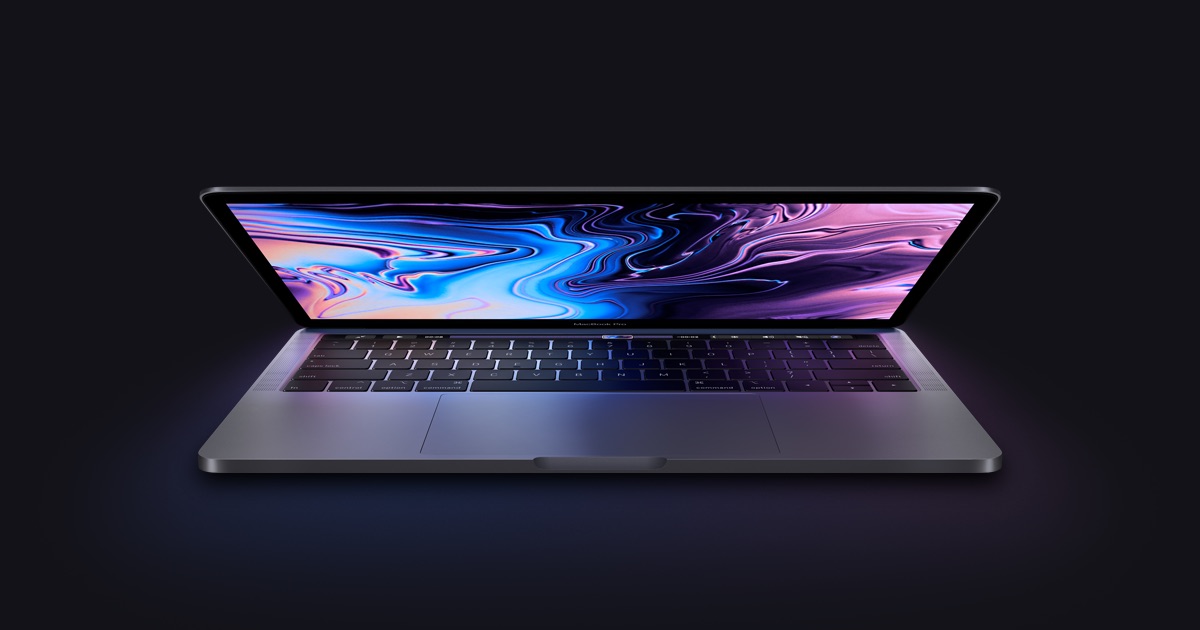
Apple is planning to launch multiple Macs with ARM-based processors in 2021, according to a new report from analyst Ming-Chi Kuo.

The move would give Apple a significant competitive advantage, not only in performance and cost, but also in not having to rely on Intel's roadmap. Earlier this year, Kuo said that Apple would first introduce a notebook with an ARM-based processor in Q4 2020 or Q1 2021.

According to a research note obtained by MacRumors, Kuo also believes Macs will gain support for USB4 in 2022.


Spotlight Deal:
Get $10 Off $25 Orders of Office and School Supplies [Deal]

Share Article:
Facebook,  Twitter,  LinkedIn,  Email,  Reddit,  Digg,  Delicious,  StumbleUpon

Follow iClarified:
Facebook,  Twitter,  LinkedIn,  Newsletter,  App Store,  YouTube


from iClarified - Apple News and Tutorials https://ift.tt/39hKiba

Kuo: Apple to Launch Several Macs With Arm-Based Processors in 2021, USB4 Support Coming to Macs in 2022

Apple plans to launch several Mac notebooks and desktop computers with its own custom designed Arm-based processors in 2021, analyst Ming-Chi Kuo said today in a research note obtained by MacRumors.

Kuo believes that Arm-based processors will significantly enhance the competitive advantage of the Mac lineup, allow Apple to refresh its Mac models without relying on Intel's processor roadmap, reduce processor costs by 40 to 60 percent, and provide Macs with more hardware differentiation from Windows PCs.


Earlier this month, Kuo said Apple's first Mac notebooks with Arm-based processors will launch in the fourth quarter of 2020 or the first quarter of 2021.

Kuo expects ASMedia Technology to become the exclusive supplier of USB controllers for Arm-based Macs, adding that the Taiwanese integrated circuit designer will benefit from Macs gaining support for USB4 in 2022.

USB4 converges the Thunderbolt and USB protocols as part of Intel's goal to make Thunderbolt available on a royalty-free basis, which should result in wider and cheaper availability of Thunderbolt accessories like docks and eGPUs.

As USB4 is based on Thunderbolt 3, it offers data transfer speeds up to 40 Gbps, which is twice as fast as the bandwidth of the latest USB 3.2 Gen 2x2 specification. USB4's underlying Thunderbolt 3 protocol also means the specification supports up to two 4K displays or one 5K display over a single cable.

The simplest way to view USB4 is as Thunderbolt 3, but royalty free for manufacturers. Intel will continue to offer Thunderbolt 3 on a standalone basis with a few advantages over USB4, including more support with reference designs and technical issues for manufacturers.

The new USB4 specification was published in September 2019, giving Apple plenty of time to implement it in time for 2022 Macs.
This article, "Kuo: Apple to Launch Several Macs With Arm-Based Processors in 2021, USB4 Support Coming to Macs in 2022" first appeared on MacRumors.com

Discuss this article in our forums


from MacRumors: Mac News and Rumors - All Stories https://ift.tt/39hOQ17

Court Agrees That Postmates Couriers Are Employees Entitled to Unemployment Benefits

In a pivotal win for gig workers on Thursday, the New York State Court of Appeals supported a previous state ruling that Postmates workers should be considered employees, and thus eligible for unemployment insurance. While the gig economy’s precarious nature has come under fire in recent years, the covid-19 pandemic…

Read more...


from Gizmodo https://ift.tt/3bpp4JK

A12Z Bionic Chip in iPad Pro Allegedly a Renamed A12X With Extra GPU Core Enabled

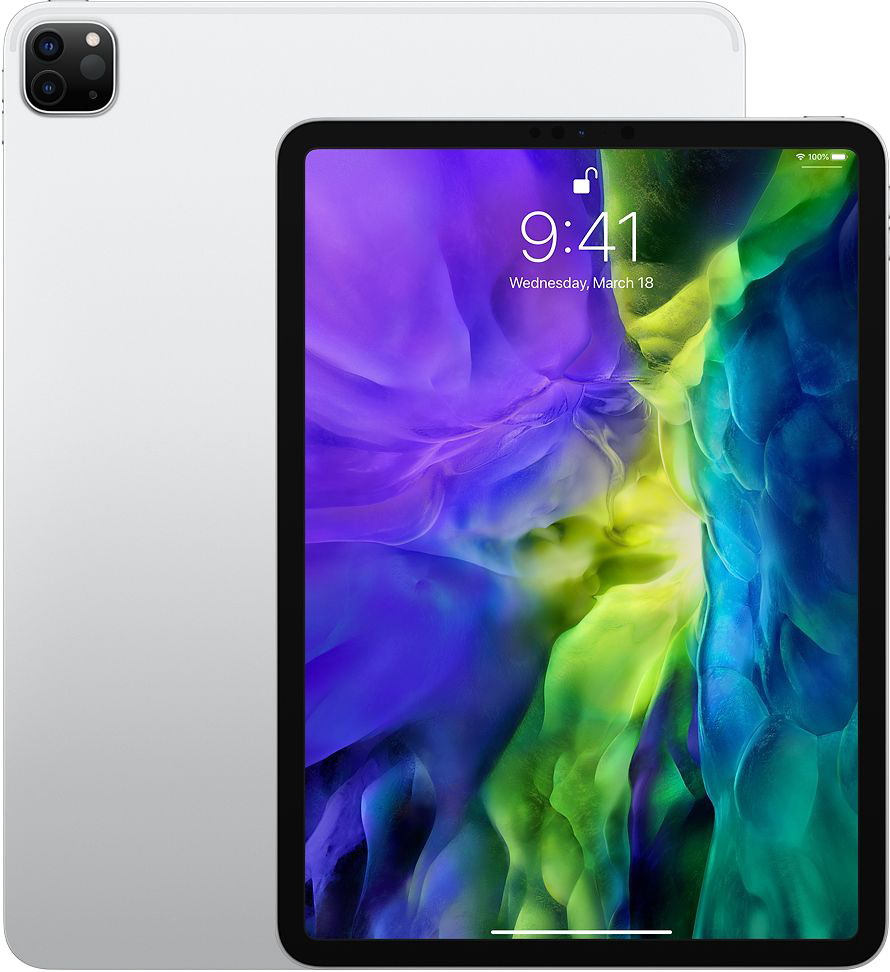
Apple's new 2020 iPad Pro models are equipped with an A12Z Bionic processor that's remarkably similar to the A12X chip in the 2018 ‌iPad Pro‌ models, offering little in the way of performance improvements.


The A12Z does, however, feature an 8-core GPU while the A12X includes a 7-core GPU, which sets them apart, but new evidence shared by NotebookCheck suggests that the A12Z Bionic is simply a renamed A12X chip with a latent GPU core enabled.

According to NotebookCheck, teardown site TechInsights confirmed that the 2018 A12X chip physically has 8 GPU cores and not the 7 GPU cores that Apple includes in tech specs. One of the cores of the A12X is disabled.

The A12X and the A12Z appear to be the same physical chip on the surface, with the same number of physical CPU and GPU cores rather, suggesting the A12Z is not a new design. AnandTech has also speculated that the A12Z is a re-binned variant of the A12X.
There can be several speculative reasons as to why Apple chose to do this. It is not uncommon to see chip makers disabling physical cores and enabling them in higher SKUs. For instance, the NVIDIA Titan RTX has all 4,608 CUDA cores enabled while the RTX 2080 Ti offers only 4,352 cores despite both using the TU102 GPU.

The other likely explanation is that Apple's decision to disable one GPU core in the A12X could have been deliberate. Enabling the latent core in an interim refresh like the A12Z would save them from having to develop an A13X and instead, directly focus on the (5 nm?) A14X that is slated to debut with the 5G ‌iPad Pro‌ later this year.
In the future, TechInsights is planning to conduct a floorplan analysis to determine for certain whether there are any differences between the A12X and the A12Z in the new ‌iPad Pro‌ models.

NotebookCheck speculates that Apple is saving an updated chip design for future ‌iPad Pro‌ models, and there are indeed rumors of a second ‌iPad Pro‌ refresh this fall that could bring mini-LED displays and 5G connectivity.
Related Roundup: iPad Pro

This article, "A12Z Bionic Chip in iPad Pro Allegedly a Renamed A12X With Extra GPU Core Enabled" first appeared on MacRumors.com

Discuss this article in our forums


from MacRumors: Mac News and Rumors - All Stories https://ift.tt/33QbzQX