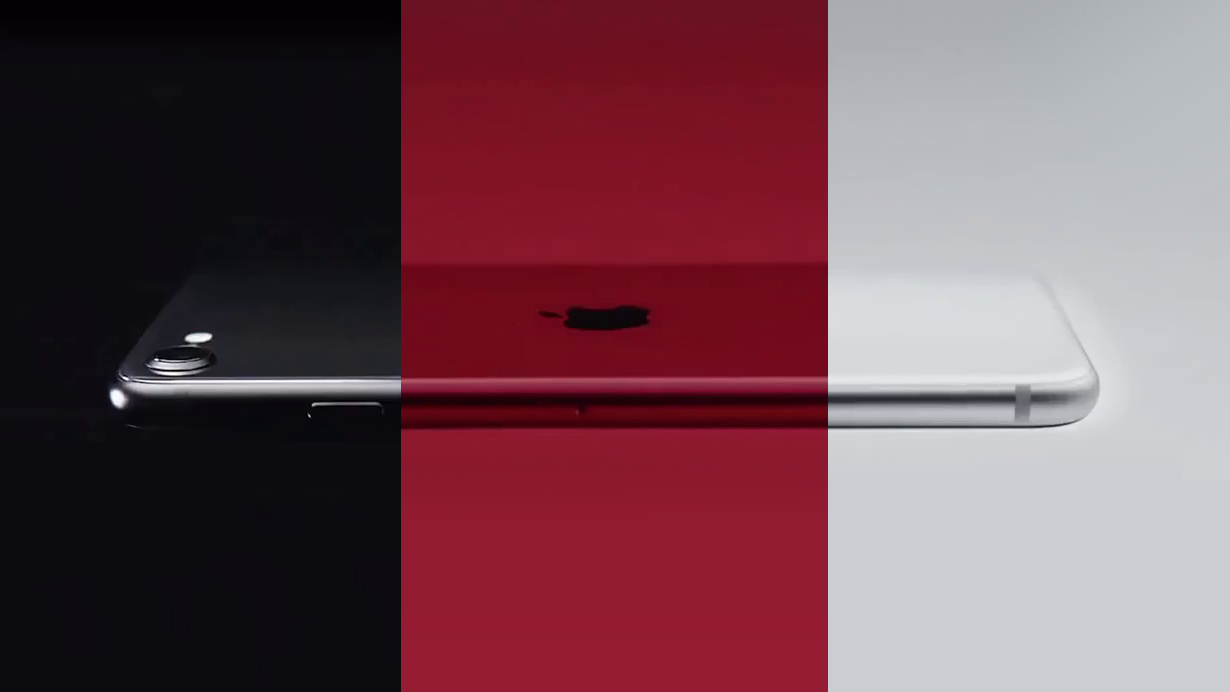
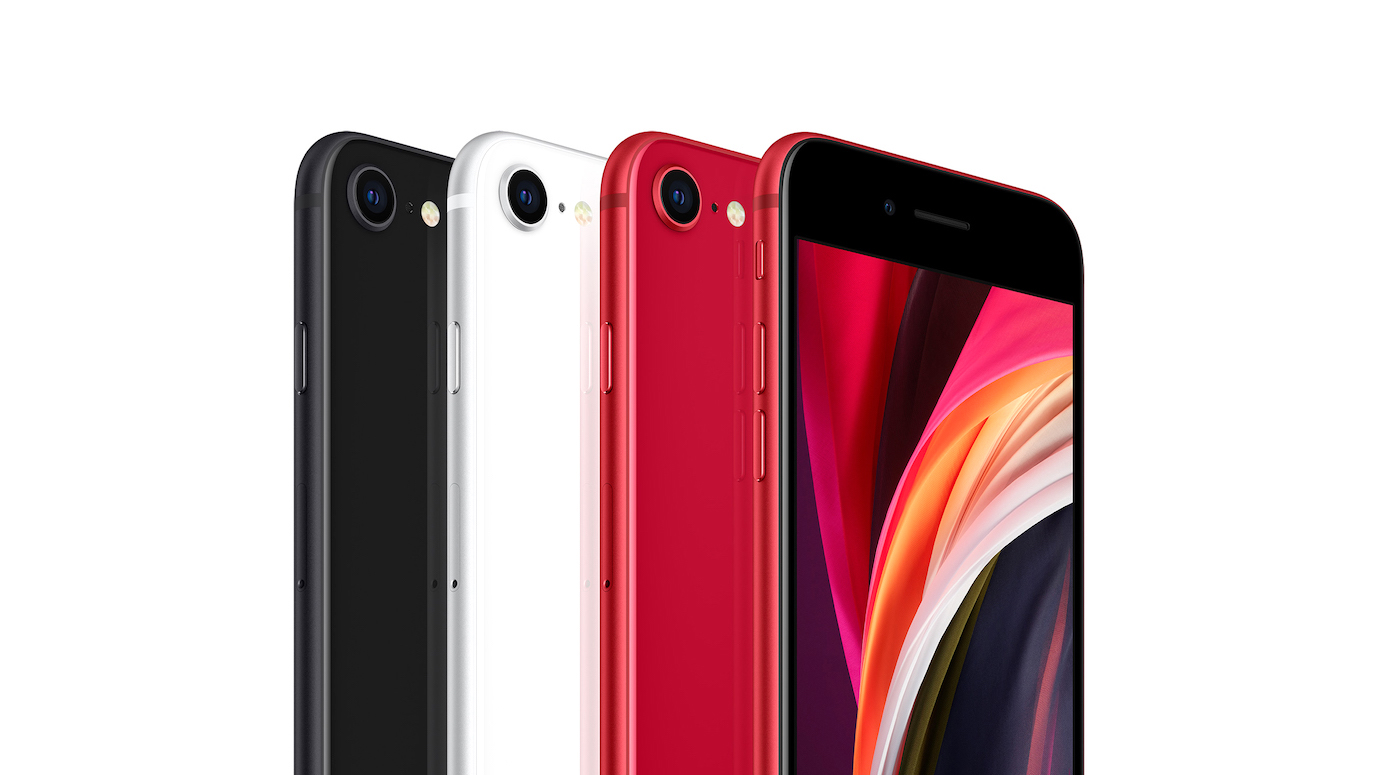
The new iPhone SE is now available to pre-order from Apple in the United States and more than 40 other countries and regions. Pricing starts at $399 for 64GB of storage, with 128GB and 256GB options available for $449 and $549 respectively. The first deliveries to customers and in-store availability at select resellers will begin Friday, April 24.
The second-generation iPhone SE has a similar design as the iPhone 8, including a 4.7-inch display and a Touch ID home button, but it has a faster A13 Bionic chip. Other features of the device include a single-lens 12-megapixel Wide rear camera with Portrait mode support, wireless charging, IP67-rated water resistance, and Wi-Fi 6.
Given its lower price point, the new iPhone SE lacks some premium features of iPhone 11 Pro models, including an OLED display, stainless steel frame, Face ID, and a triple-lens rear camera. The device also lacks a headphone jack.
The new iPhone SE is available to pre-order on Apple.com and in the Apple Store app in black, white, or (PRODUCT)RED. Customers can get 3% Daily Cash when they buy the device from Apple using the Apple Card.
Apple and Google are said to be in a "standoff" with the UK's health service over its plans to build an app that alerts users when they have been in contact with someone with coronavirus.
Apple and Google announced on Friday that they are working together on Bluetooth technology to help governments and health agencies reduce the spread of the COVID-19 virus around the world.
Apple says that user privacy and security will be central to the design of the project, which will use a decentralized API to prevent governments from building a surveillance-style centralized database of contacts.
However, according to The Guardian, that means if the NHS goes ahead with its original plans, its app would face severe limitations in its operation.
NHSX – the British health service's digital innovation unit – reportedly wasn't aware of Apple and Google's project before it was announced, and it now looks like the usefulness of its own app will be severely hampered or even rendered non-functional if it doesn't implement the protocol.
That's because without adhering to the Apple and Google API, a contact tracing app won't be able to access Bluetooth when it's running in the background, and would only work when the app was open and the phone unlocked.
Similar limitations have been demonstrated in Singapore's contact tracing app, TraceTogether, which requires the user to leave their phone unlocked to work properly. The app has a three-star rating on the App Store and has been installed by just 12 percent of the country's population.
For its part, a spokesperson for NHSX denied claims of a "standoff," telling The Guardian: "This suggestion is completely wrong. Everyone is in agreement that user privacy is paramount, and while our app is not dependent on the changes they are making, we believe they will be helpful and complementary."
Apple has taken down its online store in preparation for iPhone SE pre-orders, due to start today at 5:00 a.m. Pacific Time.
The original iPhone SE was a budget 4-inch iPhone before being discontinued in 2018, but Apple has revived the name in with a new 4.7-inch model announced earlier this week that looks like an iPhone 8 with internals similar to those of the iPhone 11.
There's a single-lens 12-megapixel rear camera in the iPhone SE with an f/1.8 aperture, optical image stabilization, and support for Portrait Mode and Portrait Lighting. Night Mode is not supported, but there is Smart HDR, Wide color support, and more, plus an LED True Tone flash with Slow Sync capabilities.
Because the iPhone SE is physically identical to an iPhone 8, it continues to feature thick top and bottom bezels. The top bezel houses the 7-megapixel front-facing camera and microphone while the bottom bezel includes a Touch ID Home button for fingerprint-based biometric authentication.
Like the iPhone XR, iPhone 11, 11 Pro, and 11 Pro Max, the iPhone SE features support for Haptic Touch instead of 3D Touch. That means 3D Touch has officially been eliminated from Apple's iPhone lineup as the now-discontinued iPhone 8 was the last iPhone Apple sold that supported 3D Touch.
The UK Apple Store shows a different placeholder
The second-generation iPhone SE features an A13 Bionic chip, 3GB RAM, and a low starting price of $399. Comes in white, black, and red, and comes with 64, 128, or 256GB of storage. First pre-orders are expected to ship in one week.
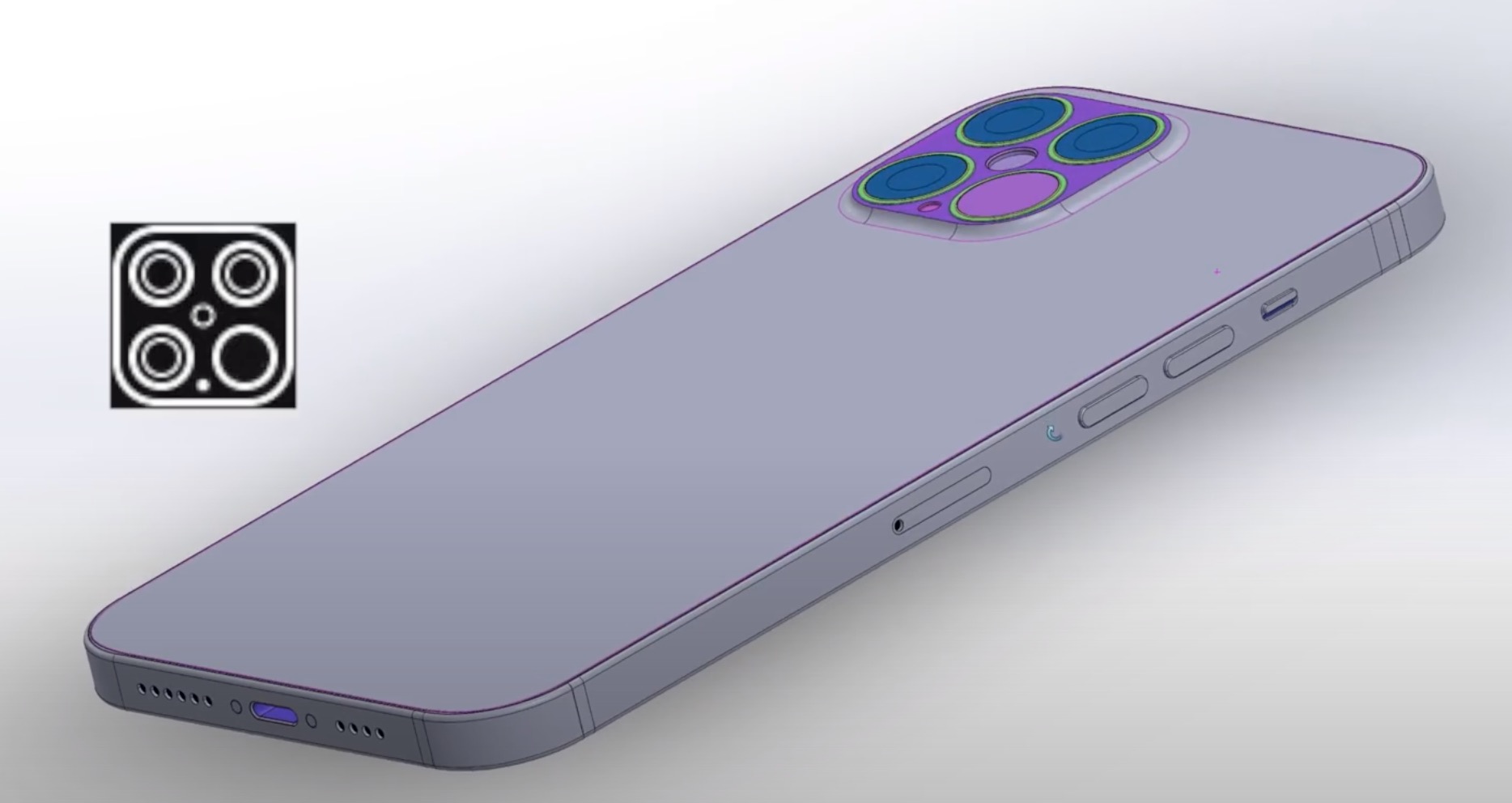
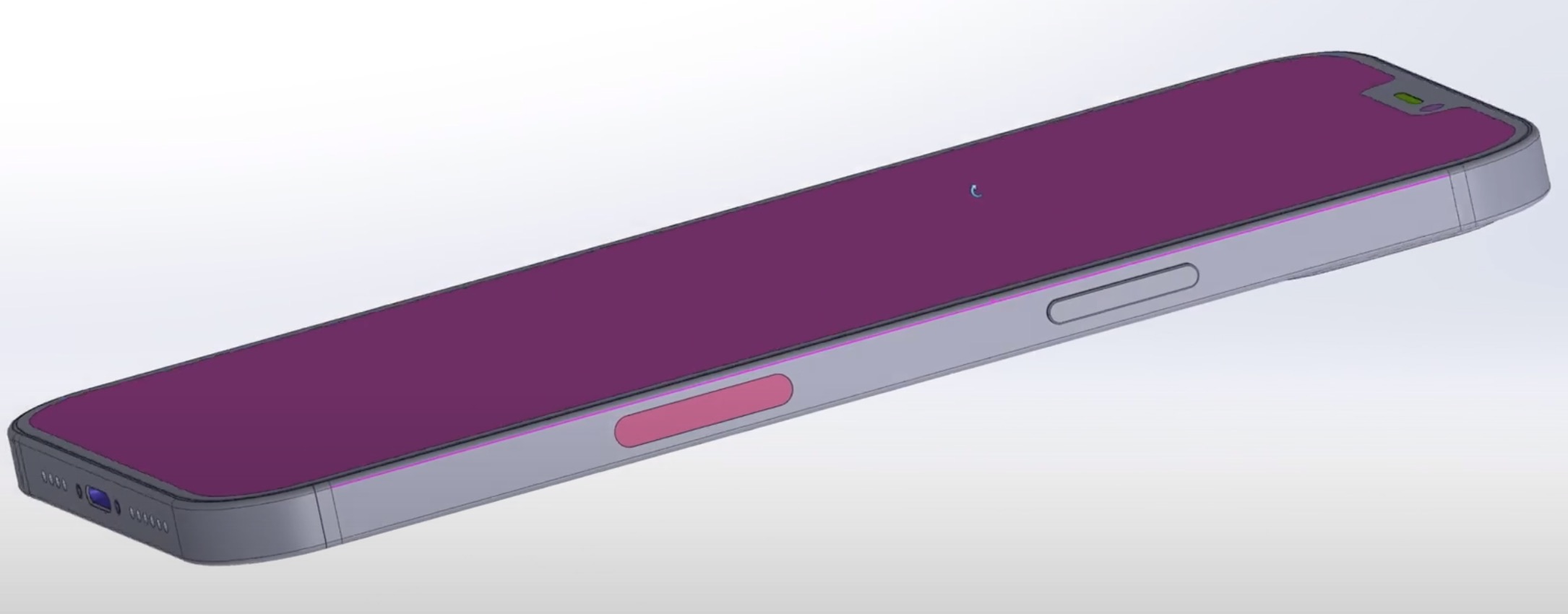
YouTube channel EverythingApplePro and Max Weinbach have shared what they're claiming is a sneak peek of Apple's hitherto unreleased "iPhone 12 Pro Max," based on alleged leaked CAD designs.
The key thing about the CADs is they line up with rumors suggesting that Apple's new iPhone will take many design cues from the iPad Pro. The schematics show a squared-edged stainless steel frame between two pieces of glass, replacing the rounded stainless steel frame of the iPhone 11 series.
In order to house the bigger 6.7-inch OLED screen, the device will be slightly wider and taller, and the bezels have been shaved to an impressive 1.55mm, compared to 2.52mm on the 6.5-inch iPhone 11 Pro Max.
They also mirror rumors that the new iPhone 12 Pro Max will have a thickness of 7.4mm, which would be quite a bit thinner than the 8.1mm thick iPhone 11 Pro Max. However, the camera bump is said to be slightly thicker, 1.26mm rather than 1.21mm, although the cameras themselves don't protrude as much.
One oddity in the designs is that the size of the notch is the same as the one found on Apple's current iPhone lineup. Previous rumors suggest Apple has designed a smaller notch, although Weinbach claims that these details weren't finalized when the CAD was made, which is a genuine possibility.
Smart Connector-esque input where SIM card try used to be.
One less speaker hole on right side speaker grille.
10 to 15 percent louder speakers.
Power button sits slightly lower on device.
New colors could include light blue, violet, and light orange.
Weinbach has accurately revealed a new iPhone color in the past, and has previously claimed that the iPhone 12 in Navy Blue could replace the Midnight Green finish available for iPhone 11 Pro models.
Weinbach also accurately predicted that the volume HUD would become less obtrusive in iOS 13, but he has also shared several Apple-related rumors that did not pan out, including the iPad getting a native Calculator app in iOS 13 and the HomePod launching in Austria and Italy within 2019. Weinbach has a more established track record with Android-related rumors, but this could be set to change.
Apple is expected to offer four iPhones in three different sizes this year: A 5.4-inch iPhone, a 6.7-inch iPhone, and two 6.1-inch iPhones. One 6.1-inch model and the 6.7-inch model will be higher-end iPhones, while the other 6.1-inch iPhone and the 5.4-inch iPhone will be lower-end models and successors to the iPhone 11.
"Home," a TV show about people who live in creative houses, today launched on Apple TV+, marking the debut of the service's first docuseries.
"Home" is described as a look at the imaginative dwellings of visionaries who challenge the conventional concepts of "home" and rethink how we live.
There are nine episodes in the series featuring different dwellings around the world in places like Sweden, Bali, Chicago, Hong Kong, Maine, India, Malibu, Austin, and Mexico. Each episode is around 30 minutes long.
The first episode of the series, "Sweden," features the home of a man who constructed a greenhouse over a log cabin, while other episodes feature a home made entirely from bamboo, a science fiction-themed house, a home made from handcrafted materials, and more.
The show is available now in the Apple TV app on iPhone, iPad, Macs, Apple TV, and select smart TVs that include the Apple TV app. It is available to all Apple TV+ subscribers.