Thursday, 23 July 2020

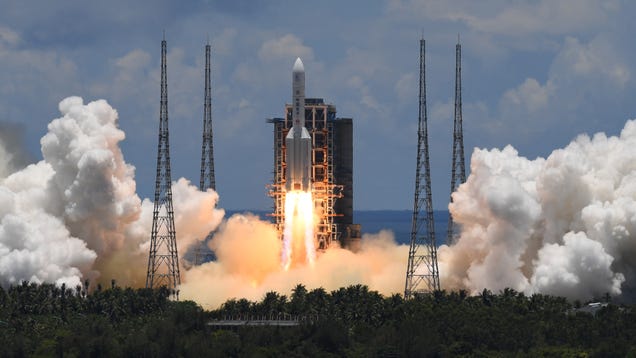
China Launches Country's First Independent Mission to Mars, Complete With Rover

China successfully launched its first independent mission to Mars, dubbed Tianwen-1, from the Wenchang Space Launch Center in Hainan Province on Thursday. China’s “Long March-5” rocket is carrying an orbiter, lander, and even an uncrewed rover that will explore the surface of Mars in 2021, provided everything goes…

Read more...


from Gizmodo https://ift.tt/39kt3Yt

Apple Gains Supplier of Super-Thin Circuit Boards for Upcoming Mini LED iPads and MacBooks

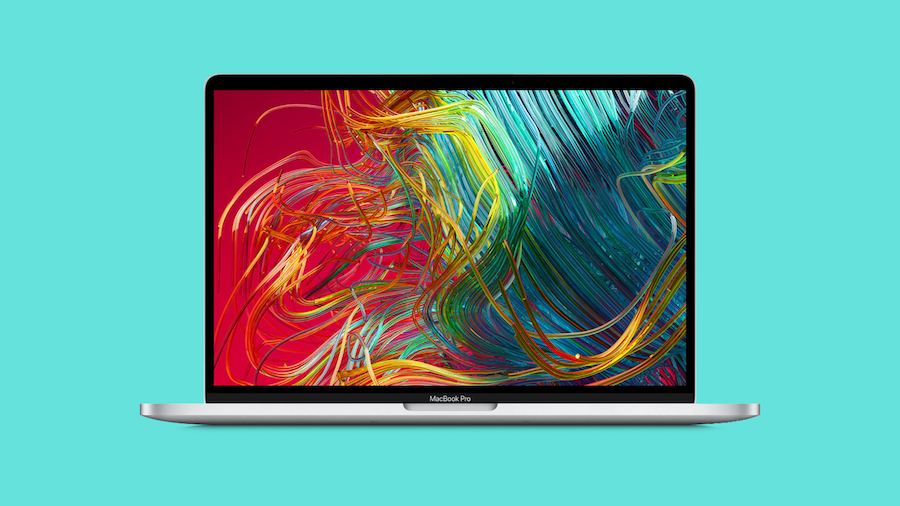
Apple will use super-thin rigid PCB boards provided by Tripod Technology in its upcoming mini LED-backlit iPads and MacBooks, according to a new report by DigiTimes.

Apple's mini LED backlight modules will adopt three-layer rigid boards, which require higher flatness and hole density than general rigid PCBs to support mass transfer technology, with materials also having to achieve extremely low shrinkage/expansion rates, the sources said.
According to today's report, Apple has brought Tripod into the supply chain for Apple's forthcoming mini LED devices because of the manufacturer's good cost control capability and production management.

The manufacturer will reportedly share orders for mini LED backlight modules with leading Taiwanese PCB supplier Zhen Ding Technology, but it will need to purchase high-precision drilling machines and other automation equipment to meet the requirement. The supplier is said to be beginning trial production of sample super-thin rigid boards, and could start volume production in early 2021.

Apple is eager to adopt mini-LED technology as it allows for thinner and lighter product designs, while offering many of the same benefits of OLED displays used on the latest iPhones, including good wide color gamut performance, high contrast and dynamic range, and local dimming for truer blacks.

Apple has six mini-LED products in the works that are set to debut in 2020 and 2021, according to analyst Ming-Chi Kuo. Apple is said to be debuting the technology in a 12.9-inch ‌iPad Pro‌ for launch later this year, followed by a 27-inch iMac Pro, a 14.1-inch MacBook Pro, a 16-inch ‌‌‌MacBook Pro‌‌‌, a 10.2.-inch iPad, and a 7.9-inch ‌‌‌iPad‌‌‌ mini.

Kuo hasn't given projected launch dates for the other devices with the exception of the ‌‌‌iMac Pro‌‌‌, which Kuo expects to launch in the fourth quarter of 2020, and the 7.9-inch ‌‌‌iPad‌‌‌ mini, which he says will launch in 2020.
Related Roundups: iPad Pro, iMac, iPad mini 5

This article, "Apple Gains Supplier of Super-Thin Circuit Boards for Upcoming Mini LED iPads and MacBooks" first appeared on MacRumors.com

Discuss this article in our forums


from MacRumors: Mac News and Rumors - All Stories https://ift.tt/3eU1KoM

Do-It-All Streaming Service Plex Is Launching a New TV Feature—And Yes, It's Free

As part of its ambitious bid to be your go-to streaming service for virtually everything, Plex this week announced the addition of a new, free TV feature with more than 80 channels available at launch.

Read more...


from Gizmodo https://ift.tt/3jwzaNZ

Apple Says 'No Evidence' of Forced Labor at Key Chinese Supplier

Apple says it has found no evidence of alleged forced labor at one of its key Chinese suppliers, after the U.S. government blacklisted O-film as part of its continuing crackdown on Chinese tech companies.
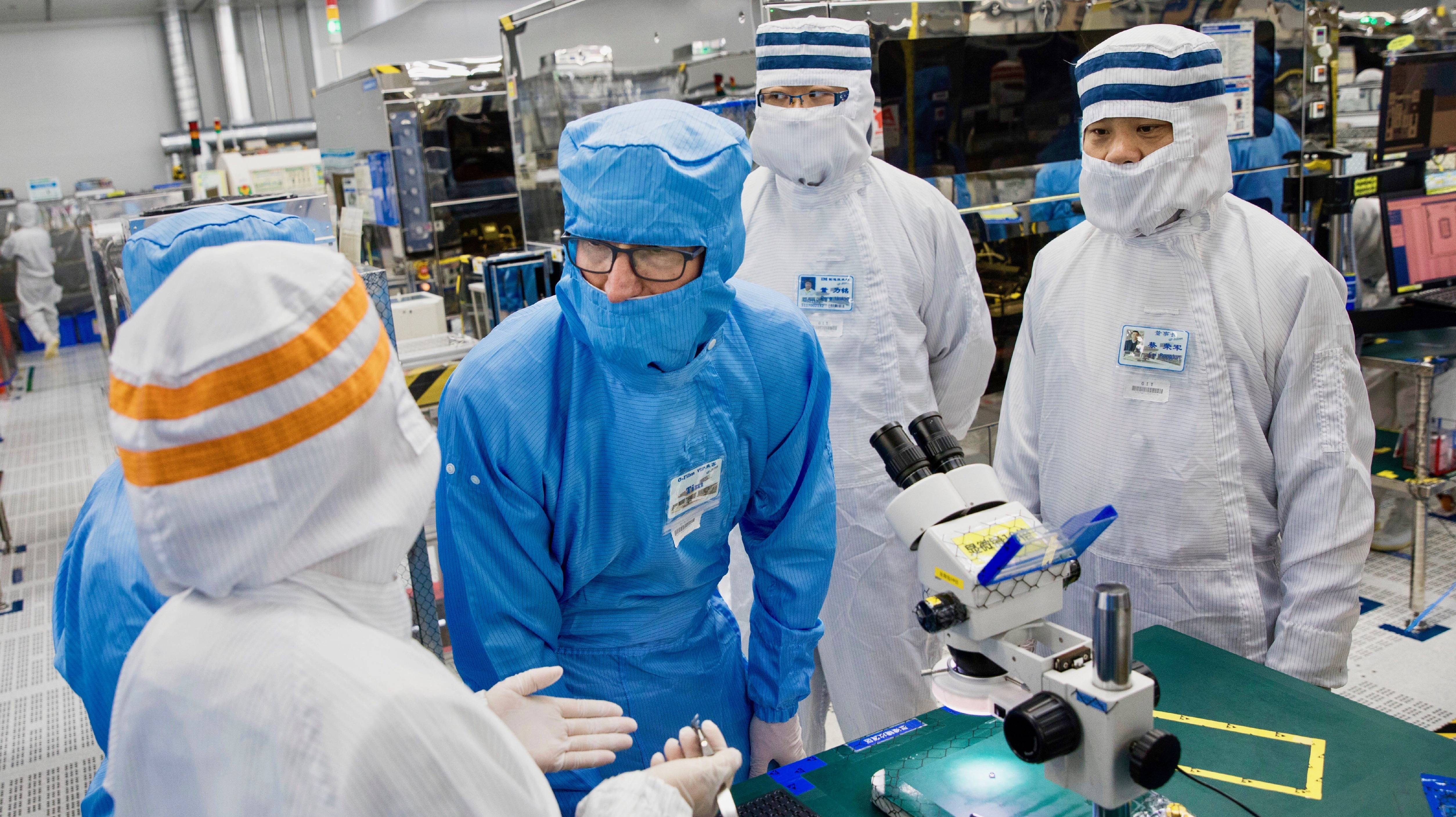
Tim Cook on a visit to a Chinese O-film facility in 2017

Camera and touch module supplier O-film Group was one of 11 Chinese companies added to the U.S. Commerce Department's Entity List on Monday over alleged human rights abuses involving China's Uighur Muslim minority. Activists have also launched a campaign accusing firms of "bolstering and benefiting" from exploitation of the minority group.

Reports by U.S. Congress and the Australian Strategic Policy Institute (ASPI), among others, have found that thousands of Uighers have been transferred to work in factories across China under conditions that strongly suggest forced labor. The ASPI has inked the factories to over 80 brands, including Apple, Nike, and Gap.

However, Apple told BBC News on Thursday that it had investigated the claims against O-film and had not discovered anything untoward, despite conducting several surprise audits at O-film facilities.
"We have found no evidence of any forced labour on Apple production lines and we plan to continue monitoring," the firm said.
O-film has been part of Apple's supply chain since 2017, first for iPads and later for iPhones. O-Film currently supplies front-end camera modules and dual-camera modules for Apple's upcoming "iPhone 12" lineup.

The manufacturer has successfully competed for Apple's business by showing that it can meet the company's high quality standards, fending off rival camera module suppliers including Foxconn-owned Sharp of Japan and LG Innotek.

In December 2017, Apple CEO ‌Tim Cook‌ visited one of O-film's factories and praised the tech expertise and work culture, according to a press release on O-film's official website.

Nikkei Asian Review notes that Apple's 2019 suppliers list shows that three out of the four O-film facilities that supply Apple are in Nanchang, where the blacklisted subsidiary is located, although it's not clear if the subsidiary operates any of the facilities that directly supply Apple.

Note: Due to the political or social nature of the discussion regarding this topic, the discussion thread is located in our Political News forum. All forum members and site visitors are welcome to read and follow the thread, but posting is limited to forum members with at least 100 posts.
Tag: China

This article, "Apple Says 'No Evidence' of Forced Labor at Key Chinese Supplier" first appeared on MacRumors.com

Discuss this article in our forums


from MacRumors: Mac News and Rumors - All Stories https://ift.tt/3huarYN
Wednesday, 22 July 2020

A Woman Goes All Count of Monte Cristo on Genetics in the Biohackers Trailer

A medical student studying under a controversial professor finds herself entangled in a world of forbidden science. A tale as old as time. But what if there’s another, more personal reason she’s embraced synthetic biology and genetic enhancements? It’s not just because she thinks biohacking is cool. She’s there to…

Read more...


from Gizmodo https://ift.tt/39l1NZZ